01
Sense
Radar, AIS, EO/IR, LiDAR, sonar, GNSS and machinery data form the vessel’s live operating picture.

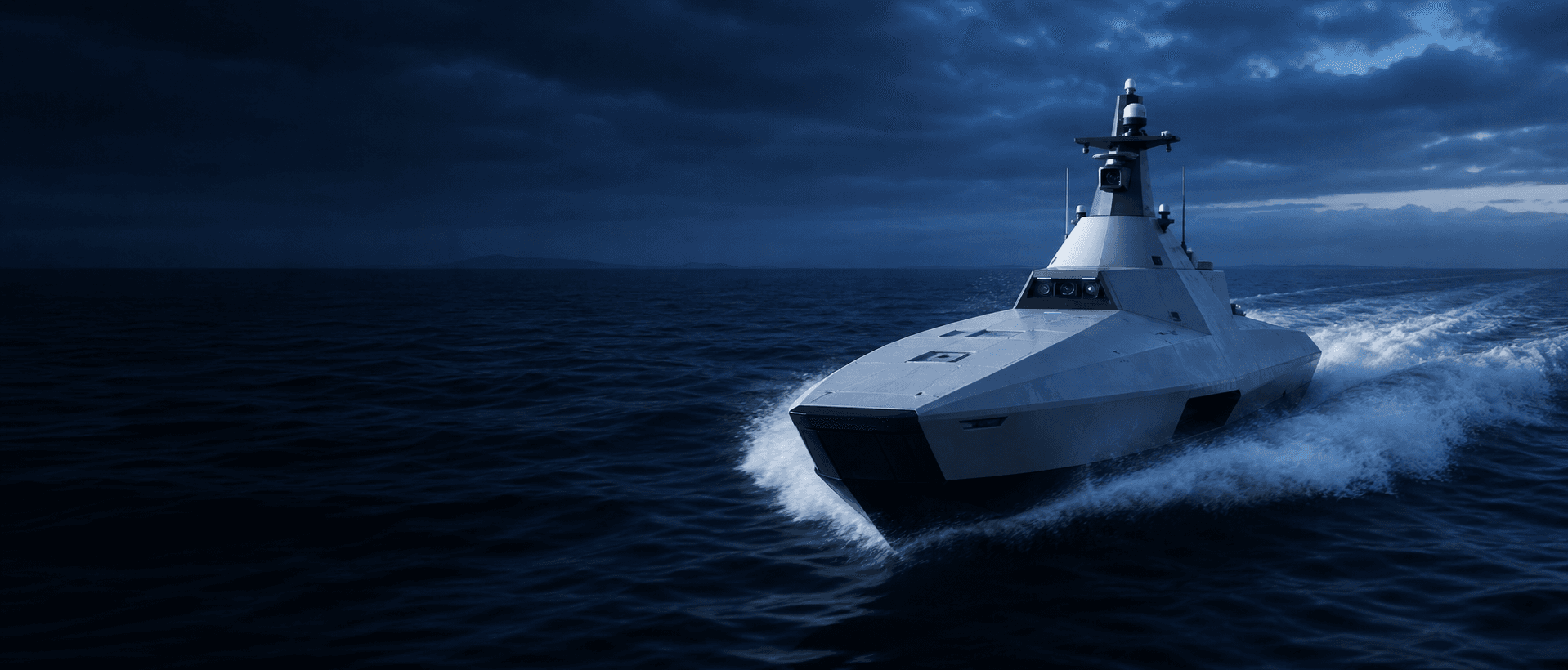
Crown OS · Integrated vessel intelligence
Electric propulsion, edge autonomy, multi-sensor perception and remote command are engineered as one mission system—not a collection of add-ons.
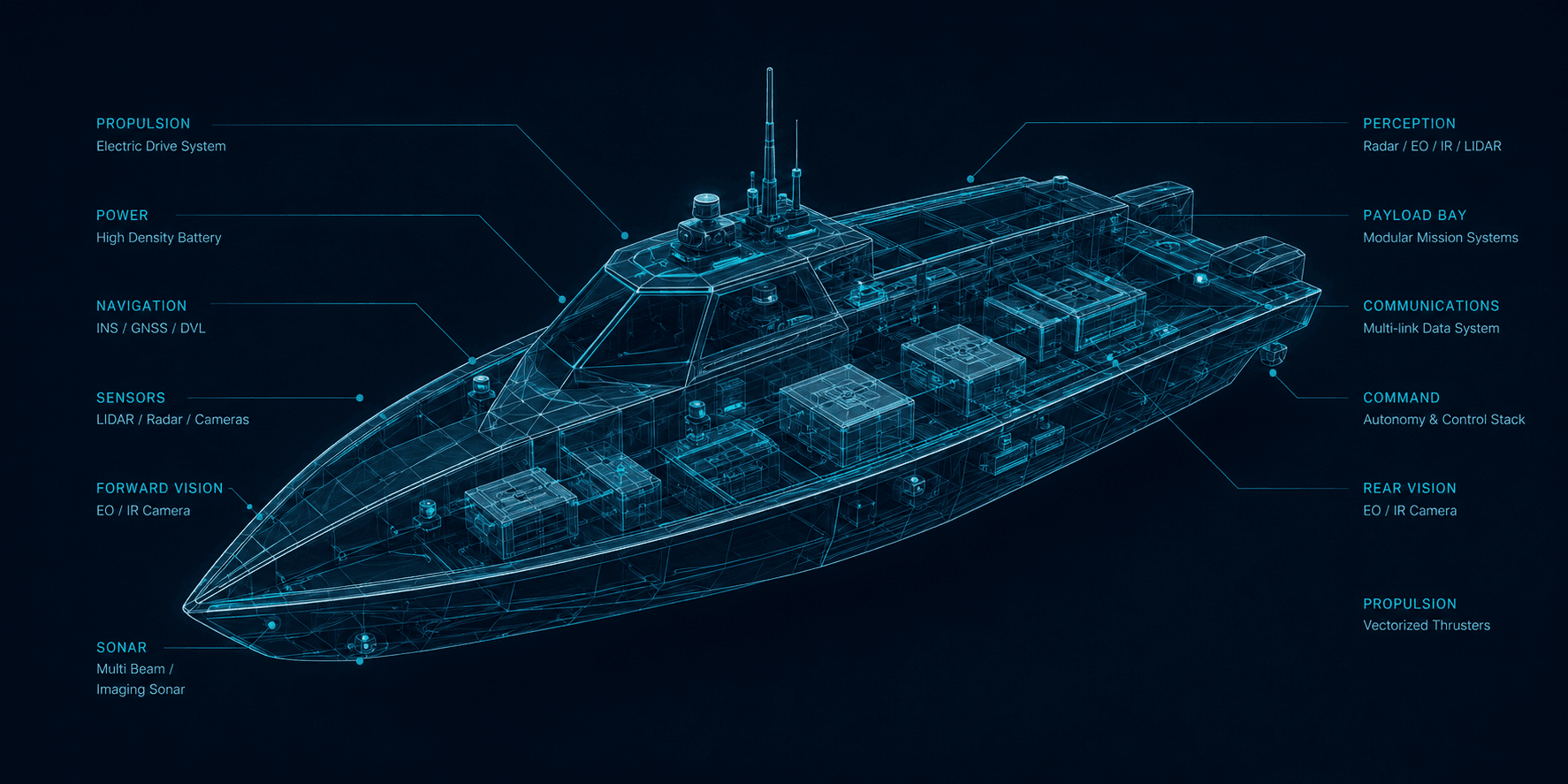
01 · Signal-to-action architecture
Crown’s architecture connects propulsion, navigation, perception, communications and modular payload control. Each layer can be configured for the vessel and mission while preserving a common command experience across the fleet.
01
Radar, AIS, EO/IR, LiDAR, sonar, GNSS and machinery data form the vessel’s live operating picture.
02
Navigation, perception and platform data are combined at the edge instead of reviewed in isolated displays.
03
Mission logic evaluates routes, guard zones, hazards, energy state and operator-defined boundaries.
04
The command layer coordinates steering, propulsion, auxiliaries and approved modular mission payloads.
05
Remote operators receive vessel status, alerts, video and mission records for review and replay.
02 · Sea Machines technology profile
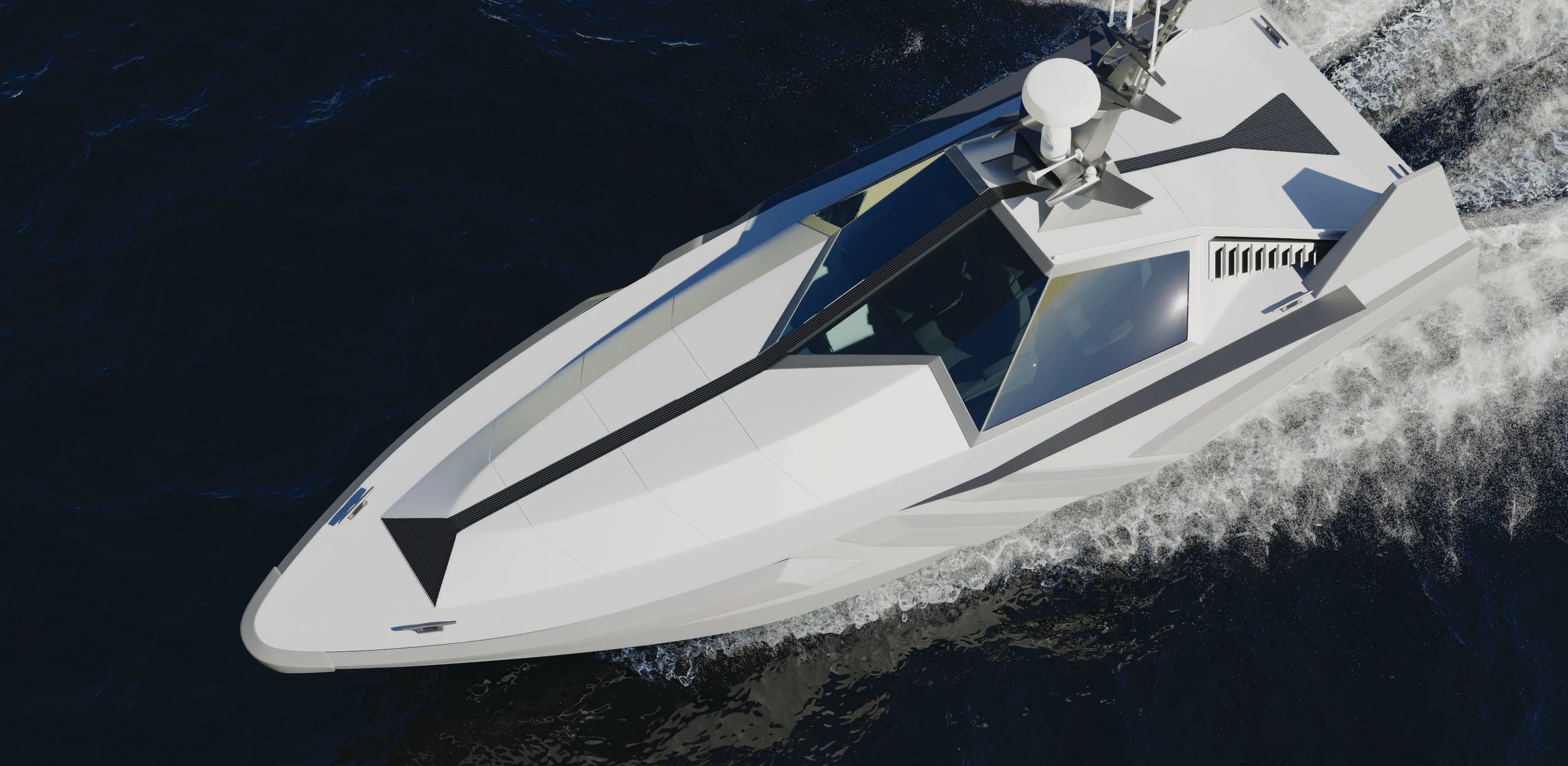
Crown’s configurable command architecture can accommodate established marine-autonomy systems. Sea Machines provides a mature technology path spanning autonomous navigation, remote command, computer vision and secure third-party mission-control integration.
Final equipment fit, integration scope and certification depend on the selected vessel and customer programme.
SM300
Waypoint and pattern missions, remote command, live vessel monitoring and collision-avoidance behaviors for new-build or retrofit vessels.
SM300-SP
Sea Machines positions the SM300-SP for high-risk naval missions with vessel-agnostic hardware, TALOS autonomy and configurable mission behaviors.
AI-RIS
A 4K camera and embedded AI detect, track, classify and geolocate surface targets while supplementing radar in day, low-light and night conditions.
SMLINK
A secure interface for approved third-party command systems to create missions, inspect alarms, manage connected hardware and retrieve logs.
03 · Autonomous defense systems
Autonomy handles the repetitive work: maintaining patrols, tracking boundaries, monitoring energy and reporting contacts. Mission authority and any consequential action remain governed by the approved command structure.
Unmanned patrol routes, sensor watch and live reporting extend maritime-domain awareness without requiring personnel aboard every craft.
Shore or mothership operators retain a common operating picture, mission authority and the ability to intervene or abort.
Operator-defined geofences, breach alerts and route constraints keep the vessel inside approved mission boundaries.
Synchronized routes, escort patterns and coordinated area coverage allow multiple vessels to work as one monitored system.
Mission bays and auxiliary channels support approved sensors, communications equipment and customer-specific payload integration.
Configured lost-link responses can include all-stop, hold-station, return routing and alerts, depending on vessel and mission approval.
 Restricted capability
One-way mission configuration
Crown lists a restricted unmanned combat-vessel configuration for verified government enquiries. Any one-way mission or effect integration is customer-specific, operator-authorized and subject to applicable law, rules of engagement, export controls and programme safety requirements.
Detailed payload, targeting and employment information is not published.
04 · Energy cluster
Mission range is a live calculation—not a number printed on a brochure.
Representative mission-interface view. Final channels and values depend on vessel configuration.
Vessel status
Underway
Speed
16.3 kn
Heading
046°
Projected range
125 nm
Battery overview
23.2 kWh
Energy remaining
31.9 kWh
Usable capacity
125 nm
Mission range
0 h 41 m
Time to reserve
Power & energy · Real time
Power
33.9 kW
Average
31.2 kW
Peak
40.0 kW
Energy / 60 min
33.2 kWh
Operating conditions
Battery bank · 32 modules
01
3.79 V
29°C
02
3.82 V
31°C
03
3.81 V
30°C
04
3.80 V
29°C
05
3.79 V
31°C
06
3.82 V
30°C
07
3.81 V
29°C
08
3.80 V
31°C
09
3.79 V
30°C
10
3.82 V
29°C
11
3.81 V
31°C
12
3.80 V
30°C
13
3.79 V
29°C
14
3.82 V
31°C
15
3.81 V
30°C
16
3.80 V
29°C
17
3.79 V
31°C
18
3.82 V
30°C
19
3.81 V
29°C
20
3.80 V
31°C
21
3.79 V
30°C
22
3.82 V
29°C
23
3.81 V
31°C
24
3.80 V
30°C
25
3.79 V
29°C
26
3.82 V
31°C
27
3.81 V
30°C
28
3.80 V
29°C
29
3.79 V
31°C
30
3.82 V
30°C
31
3.81 V
29°C
32
3.80 V
31°C
Energy use · Live
Total power
33.9 kW
05 · Smart by design
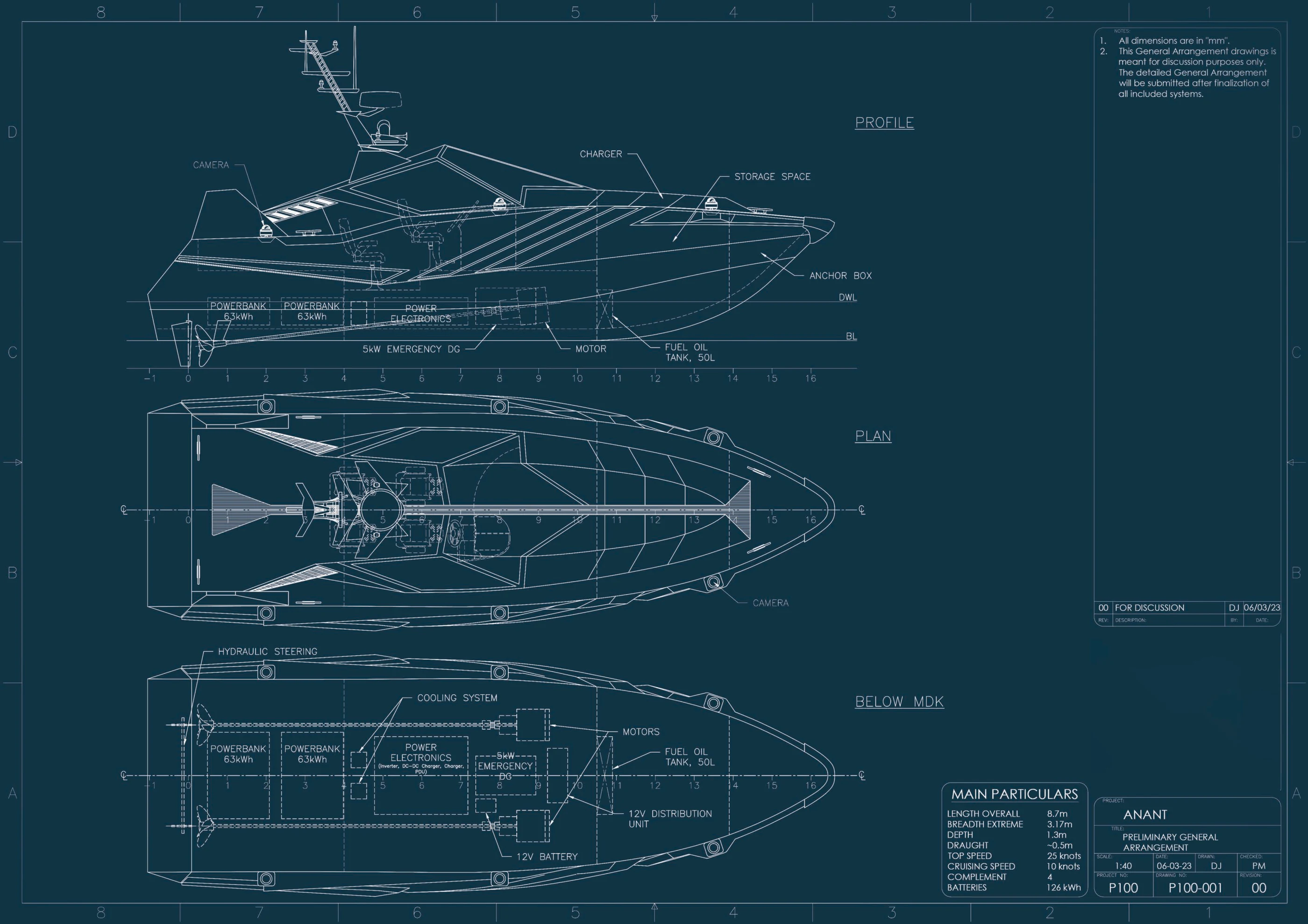
The same operating logic scales from an electric day boat to an unmanned patrol platform: know the vessel, understand the environment and keep the operator in control.
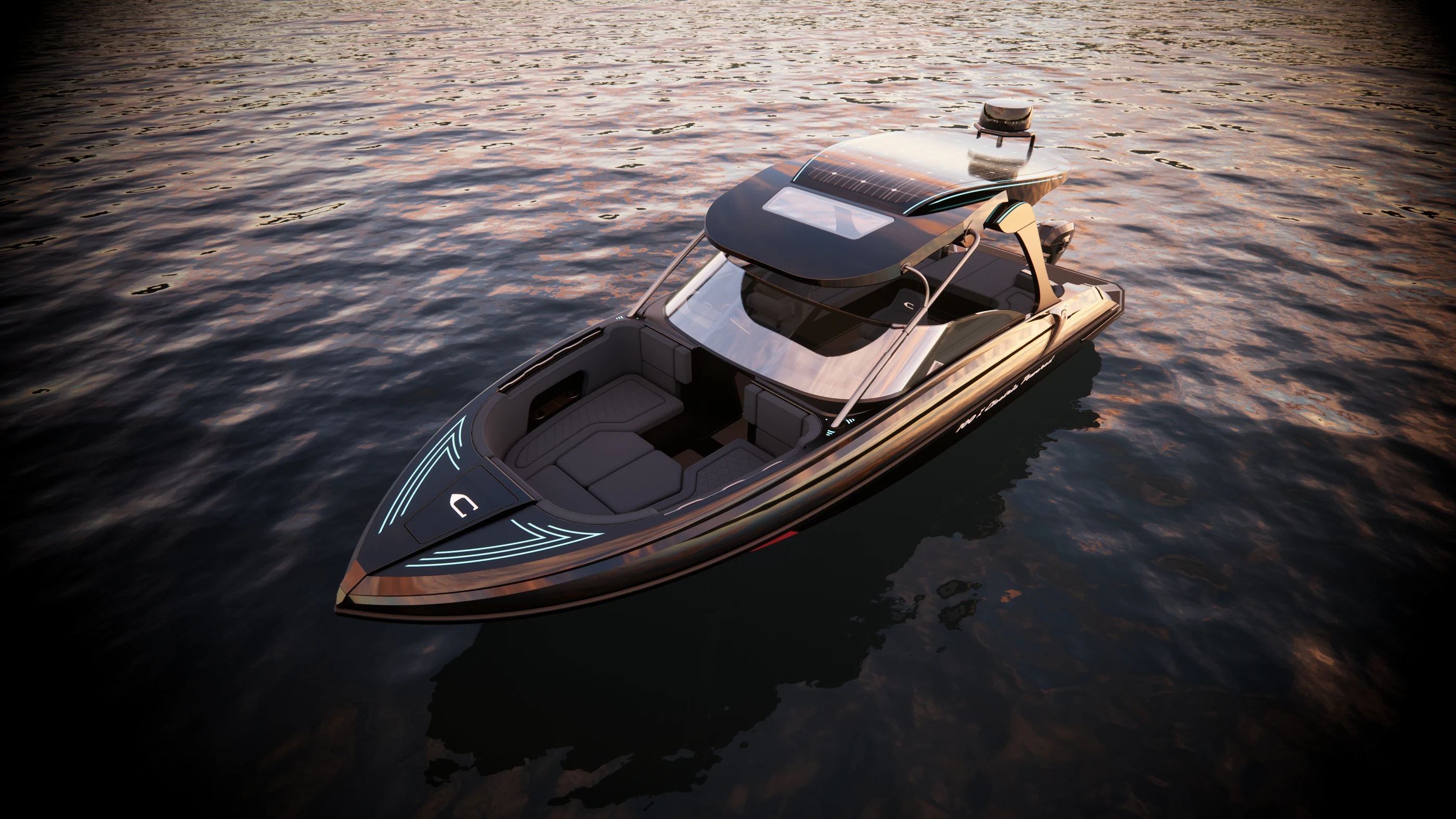
Range, power draw, mission load and reserve state are evaluated together so the operator sees the cost of every decision.
Radar, optical, infrared, AIS and navigation inputs create a more useful operating picture than any single sensor alone.
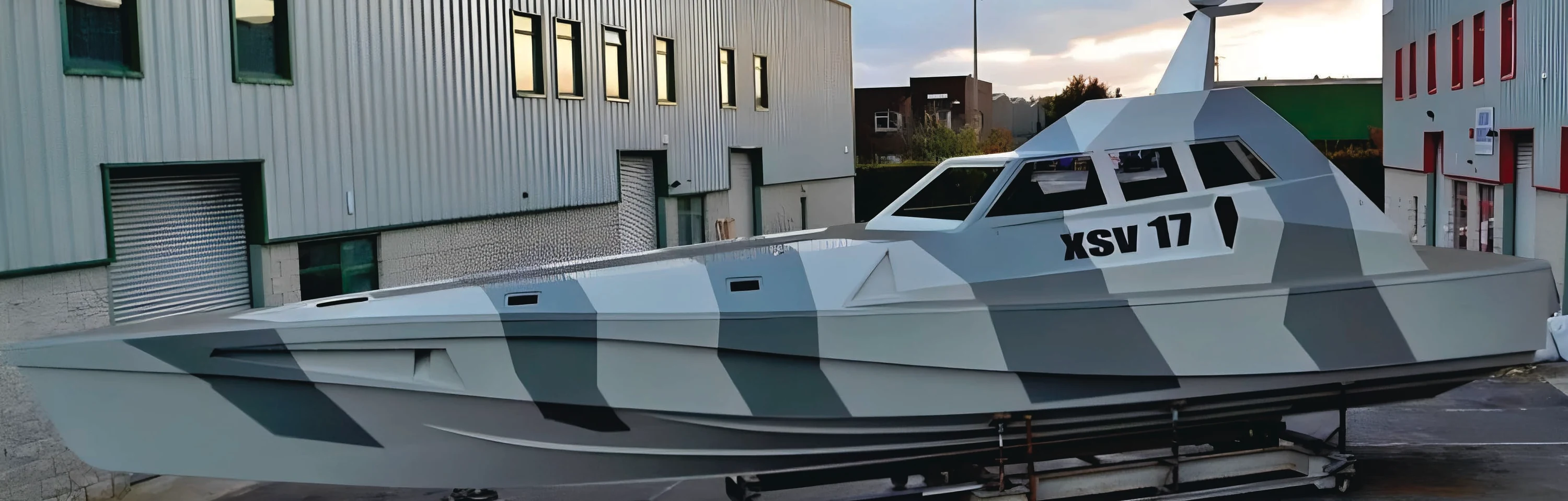
Routes, patrol patterns, guard zones and approved behaviors can be configured for the assignment without redesigning the hull.
System configuration
Sensor selection, autonomy modes, communications, energy reserve, payload interfaces and restricted mission capabilities are configured for the customer and shared after verification.